
The four pillars of the new IFRS Sustainability Standards

Home » IFRS » The four pillars of the new IFRS Sustainability Standards

The four pillars of the new IFRS Sustainability Standards

Apr 24, 2024 | IFRS, Sustainability

The Trustees of the IFRS Foundation announced the formation of the International Sustainability Standards Board (ISSB) on 3 November 2021 at COP26 in Glasgow, following strong market demand for its establishment.

The ISSB is developing—in the public interest—standards that will result in a high-quality, comprehensive global baseline of sustainability disclosures focused on the needs of investors and the financial markets.

The ISSB has international support and is backed by the G7, G20, the International Organization of Securities Commissions (IOSCO) and the Financial Stability Board, amongst others. The Standards issued by the ISSB will help combat the challenges of companies “greenwashing”, meaning stakeholders will be able to make better informed decisions with confidence.

The two IFRS Sustainability Standards are IFRS S1 General Requirements for Disclosure of Sustainability-related Financial Information and IFRS S2 Climate-related Disclosures.

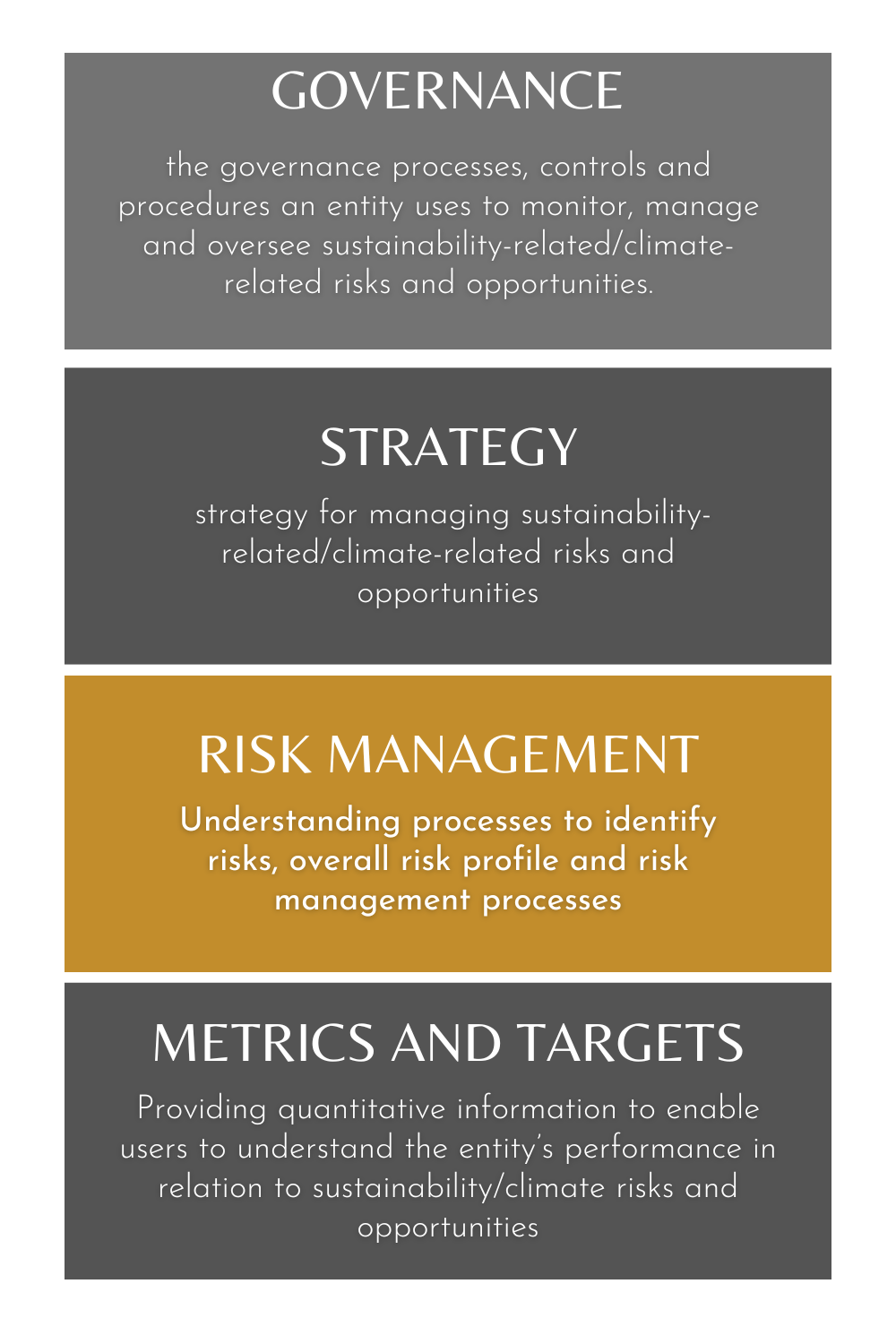
The two standards have four pillars in common illustrated below. For S1, these are sustainability-related while for S2 these are climate-related.
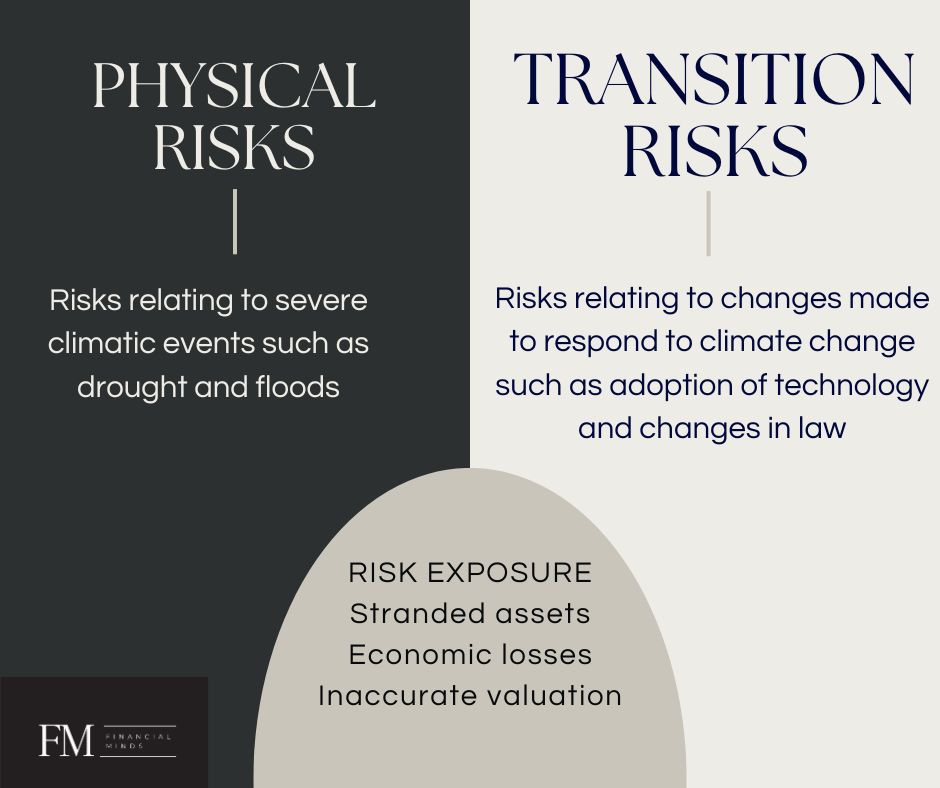
In relation to IFRS S2, there are two classes of risks namely:
Written by KC Rottok Chesaina, Chief IFRS Officer at Financial Minds. For IFRS training and consulting, email us on [email protected] 
You May Also Like
Financial Minds: LinkedIn
Latest
CFA Roy Mutooni and the subtle art of always taking ownership

CFA Roy Mutooni and the subtle art of always taking ownership

There is something quietly defiant about Roy Mutooni’s story — a trained economist who ventured into the unforgiving world of South African finance and refused to play the part of the outsider. In a market where pedigree and postcode often dictate altitude, he carved...

From JIBAR to ZARONIA: Navigating the transition with CAS

From JIBAR to ZARONIA: Navigating the transition with CAS

When the Johannesburg Interbank Average Rate (JIBAR) finally reaches its cessation date, South Africa’s financial markets will pivot decisively to the South African Rand Overnight Index Average (ZARONIA) as the new reference rate. This transition marks more than just...

CFO Letechia Lulema leads with intellect but lives with soul

CFO Letechia Lulema leads with intellect but lives with soul

When Letechia Lulema was still a teenager, her late father—a doctor with a larger-than-life personality and the authority of a man who had built his career the hard way—sat her down for one of those defining parent-child conversations at their home in Witbank. He put...

CFO Devi Padayachee leads through conversation rather than command

CFO Devi Padayachee leads through conversation rather than command

Born in Lenasia, a suburb in the south of Johannesburg, Devi Padayachee’s life was dramatically altered at the age of six when her father, a successful sales manager, fell ill. In an instant, the financial stability the family she had known disappeared. Her mother,...

From JIBAR to ZARONIA: South Africa’s Leap into the Risk-Free Era

From JIBAR to ZARONIA: South Africa’s Leap into the Risk-Free Era

Global financial markets have been steadily moving away from credit-sensitive benchmarks like LIBOR, EURIBOR, and JIBAR. South Africa is now in the midst of its own transition: the 3-month JIBAR (Johannesburg Interbank Average Rate) will be replaced by ZARONIA — the...